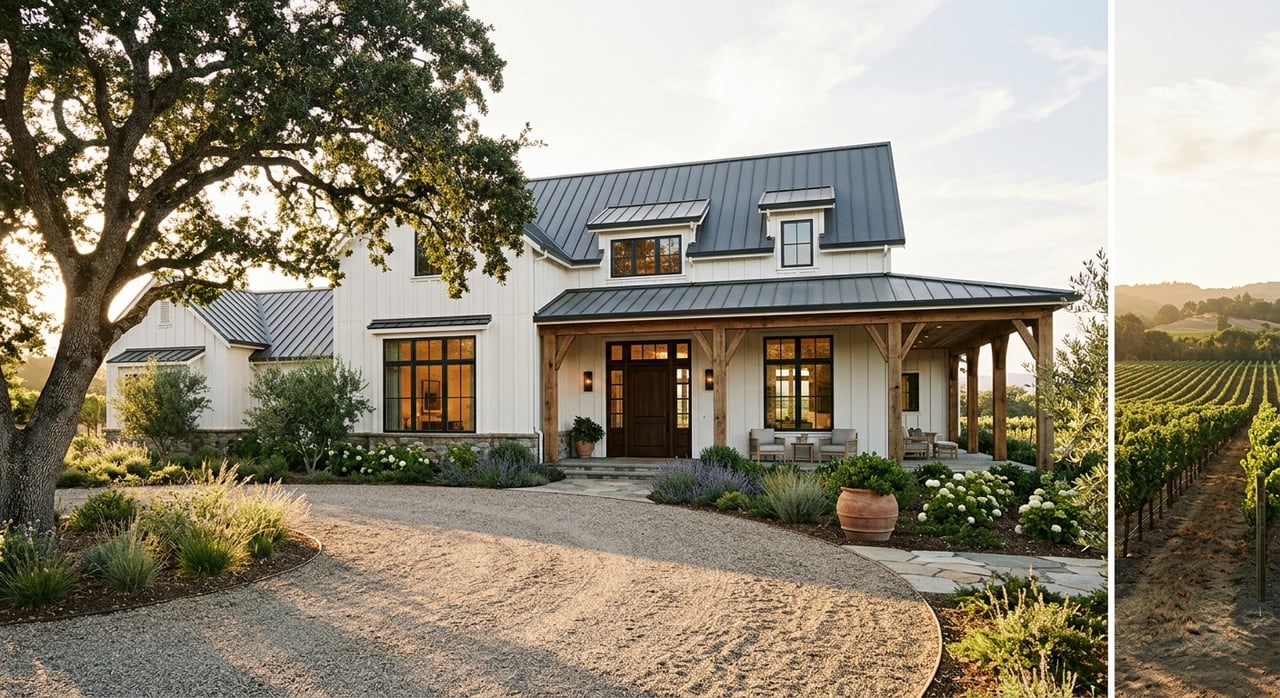
If you are drawn to St. Helena, you are probably not just choosing a house. You are choosing a daily rhythm, a setting, and a version of wine-country living that fits how you want to spend your time. In a city as compact as St. Helena, those differences can feel surprisingly distinct. This guide will help you compare the main living environments in St. Helena so you can focus your search with more confidence. Let’s dive in.
Why location feels so different here
St. Helena covers about five square miles in the center of Napa Valley, yet it offers several very different residential experiences. The city describes itself as a full-service place with a small-town atmosphere, and that balance shapes how different areas have evolved.
The city’s planning framework also helps explain why one part of town feels more walkable, while another feels more private or land-oriented. St. Helena’s 2040 General Plan and updated zoning code are designed to guide growth while preserving neighborhood character, agricultural land, and the city’s small-town identity.
Start with your day-to-day lifestyle
Before you narrow your search, think about how you want a normal Tuesday to feel. In St. Helena, the best fit often comes down to whether you want easy access to downtown, more land and separation, broader views, or a larger estate-style setting.
A helpful way to compare your options is to ask yourself a few simple questions:
- Do you want to be close to downtown shopping, dining, and services?
- Do you prefer a smaller in-town lot or a more spacious parcel?
- Is privacy more important to you than walkability?
- Do you want a home with historic character?
- Are views and elevation high on your list?
- Are you comfortable with the upkeep that can come with more land?
Historic in-town core
For many buyers, the historic in-town core is the most recognizable version of St. Helena. This area is closely tied to Main Street and adjacent streets like Adams, Charter Oak, Church, Hunt, Library Lane, Madrona, Oak, Railroad, and Spring, which are featured in the city’s architectural walking tour.
This part of town offers the strongest connection to St. Helena’s historic fabric. The city describes its Historic Commercial District as Napa County’s largest collection of commercial buildings built before 1948, with a small-scale pattern and no buildings over two stories.
Older residential streets nearby reflect that same sense of history. The city’s historic resources material notes that homes were built on both sides of Main Street, especially west along Oak, Spring, and Kearney Streets, with housing types ranging from modest cottages to more substantial residences.
What living here often feels like
If you want a compact routine, this is usually the most convenient setting. Commercial and mixed-use districts along the SR 29 and Main Street corridor have long served residents and surrounding agricultural areas with shopping and services, which makes this part of town the most closely connected to daily amenities.
Homes in this setting often feel more closely spaced than edge-of-town or rural properties. Based on the city’s walking-tour streets, historic inventory, and downtown planning context, this area is commonly associated with older single-family homes and cottages on smaller lots, often with homes sitting closer to the street.
Best fit for the in-town core
This area may suit you if you value:
- Walkability and convenience
- Historic character and architecture
- A stronger connection to downtown life
- Smaller lots with less land to manage
What to keep in mind
Historic status can be a real consideration in older in-town areas. St. Helena maintains a Historic Preservation Overlay and has completed historic surveys, including the Charter Oak and Spring Street surveys, so it is wise to understand whether a property may have additional preservation context before you buy.
Vineyard-fringed edge-of-town areas
If your ideal St. Helena feels quieter, greener, and a bit more removed from downtown, the edge-of-town areas may be the right direction. The city’s historic survey identifies agricultural properties on the outskirts of town, including along Pratt Avenue, Fulton Lane, Mills Lane, and Sulphur Springs Avenue.
These areas align more closely with the city’s agricultural and natural resource zoning structure. The A-20 zone is intended to preserve agricultural land uses and limit residential density, while other land use categories in similar edge settings are designed to respect the land and its working landscape.
What living here often feels like
This is where many buyers find a stronger sense of space. Compared with the historic core, these properties often offer more separation between homes, larger parcels, and a setting that feels more connected to vineyards and the broader agricultural landscape.
Housing here is still often single-family in nature, but the experience is different from an in-town lot. Parcels may feel more rural, with more outdoor space and a quieter edge-of-valley atmosphere.
Best fit for vineyard-fringed lanes
This setting may be a strong match if you want:
- More privacy
- More room for outdoor living
- A closer relationship to vineyard or agricultural scenery
- A less compact, more rural-feeling setting
What to keep in mind
More land often means more responsibility. Even when a property is not a working agricultural parcel, a larger site can bring added maintenance, more site-specific considerations, and a different ownership experience than a home in town.
Hillside and view settings
Some buyers come to St. Helena wanting a broader outlook over the valley. In those cases, hillside or elevated settings can offer a very different experience from both downtown and vineyard-edge properties.
St. Helena sits in a relatively narrow valley framed by foothills to the east and west. The city’s environmental review notes long vineyard views, wooded hillsides, and open-space framing at the north and south approaches, which helps explain why elevated properties can feel especially distinct.
What living here often feels like
These settings tend to offer more elevation, more separation, and a stronger sense of retreat. They may also provide a better chance at broader valley views or outlooks across surrounding open space.
The tradeoff is usually convenience. Compared with the downtown core, hillside and view properties are generally less immediately walkable and may feel more removed from shops, dining, and everyday services.
Zoning helps shape the experience
St. Helena’s residential zoning distinguishes between more compact neighborhoods and very low-density areas. For example, LR-1A is limited to roughly one unit per gross acre, while other districts support denser residential patterns, and the WW district is intended to allow development that responds to land capability and natural conditions.
That framework matters because it helps preserve the spacing and landscape feel that many buyers are looking for in a view-oriented property. In practical terms, it often supports a more private and land-sensitive residential pattern.
Best fit for hillside homes
A hillside or elevated property may suit you if you prioritize:
- Views and outlooks
- Privacy and separation
- A quieter residential setting
- Larger parcels and a more land-focused lifestyle
Country estates and legacy parcels
At the broadest end of the spectrum, St. Helena also includes larger estate-style properties and legacy homes. The city’s historic inventory describes local housing on a range from small cottages to major estates, which helps show how far the market can stretch within one small city.
For some buyers, this is the version of St. Helena that feels most enduring. These properties often deliver the greatest sense of space and the most land-oriented ownership experience, whether that means a long approach, a more expansive residential setting, or simply more breathing room around the home.
What makes this category different
Country estates and legacy parcels are less about simple square footage comparisons and more about overall setting. The experience can include privacy, scale, and a stronger relationship to the land itself.
They also tend to require more careful evaluation because the lifestyle is different from owning a compact in-town home. Access, topography, parcel size, land use context, and upkeep can all matter more here.
Best fit for estate properties
This category may be the right fit if you are looking for:
- A larger parcel
- Long-term legacy appeal
- A more private wine-country setting
- A property where land is a central part of value
A simple way to compare St. Helena options
If you are deciding between areas, it helps to compare them through the lens of everyday life rather than just price or square footage.
| Setting | What stands out | Typical tradeoff |
|---|---|---|
| Historic in-town core | Walkability, character, convenience | Smaller lots, more proximity to neighbors |
| Vineyard-fringed edge | Privacy, land, agricultural setting | Less compact daily routine |
| Hillside/view areas | Elevation, outlooks, quiet | Less immediate access to downtown |
| Country estates | Space, legacy feel, land presence | More complex property ownership |
How to choose your corner wisely
The right St. Helena location is usually the one that supports your routine, not just your wishlist. A beautiful home can lose some of its appeal if the setting does not match how you actually want to live.
That is why local context matters so much here. In St. Helena, subtle differences in street pattern, zoning, historic context, and parcel character can shape everything from privacy to convenience to long-term enjoyment.
If you are buying in this market, it helps to look beyond the listing photos and ask better location questions. Understanding how each area of St. Helena functions can make your search more focused and your decision more confident.
When you are ready to explore the right fit for your goals, Carolyn Roberts offers the local knowledge, steady guidance, and high-touch service that matter in a market as nuanced as St. Helena.
FAQs
What is the most walkable area of St. Helena real estate?
- The historic in-town core near Main Street and the downtown area is generally the most walkable part of St. Helena, with the closest connection to shopping, dining, and services.
What parts of St. Helena feel more private?
- Edge-of-town properties, hillside settings, and larger estate parcels typically offer more separation, more land, and a greater sense of privacy than the in-town core.
Are there historic homes in St. Helena?
- Yes. Older in-town areas around Main Street and nearby streets are closely tied to St. Helena’s historic fabric, and some properties may also be affected by the city’s Historic Preservation Overlay or historic surveys.
What areas of St. Helena have more land?
- Vineyard-fringed edge-of-town areas, hillside properties, and country estate settings generally offer larger parcels than homes in the historic core.
How does zoning affect St. Helena home choices?
- St. Helena’s zoning code helps shape density, land use compatibility, and neighborhood character, which can influence whether an area feels more walkable, more rural, lower density, or more land-focused.
What should buyers compare when choosing a St. Helena neighborhood?
- Focus on your day-to-day priorities, including walkability, lot size, privacy, views, historic character, and how much property upkeep you want to take on.